Home Dealer Graphics for T-Shirt Designs
When a new client brief lands on my desk, my first move is rarely to open a blank canvas. Instead, I reach into my curated library of graphic design assets, looking for something that can anchor the visual direction without forcing me to build every element from scratch. Home Dealer crossed my screen during a search for a fresh T-Shirt Designs concept for a local boutique brand launching a farmhouse-inspired apparel line. My first impression was immediate and clear: this is a creative design asset built for warmth, handcrafted authenticity, and small business branding with personality. It does not scream for attention. It invites the viewer in, which is exactly the kind of subtle confidence that works in real client projects.
What you receive is a digital download alone, no physical product is shipped. A single zip file contains the design files, and these can be used for many purposes, including but not limited to monogram making, branding elements, and decorative accents. For any designer evaluating this asset before committing to a client project, that kind of creative flexibility is worth a close look.
The Visual Character of Home Dealer and Its Design Mood
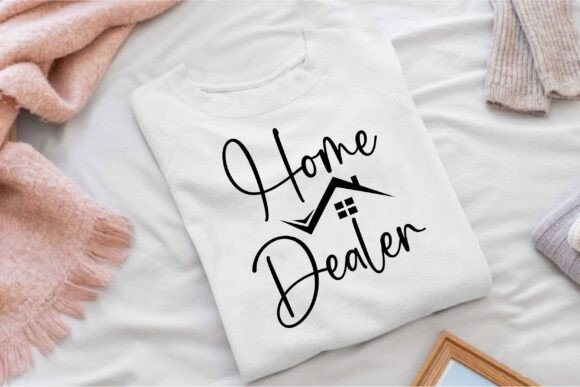
Home Dealer carries a distinctly handcrafted, warm, and approachable mood. The linework feels deliberate but not rigid, with a hand-drawn quality that suggests artisan care rather than mechanical precision. This is not a cold, corporate graphic. It lives comfortably in the space between rustic charm and modern simplicity. The overall impression is grounded, wholesome, and quietly confident. For a designer working on brand identity for a handmade business, a small farm stand, or a boutique product line, this graphic design asset immediately communicates values like authenticity, tradition, and personal attention.
The visual style leans into what I would call soft rustic. It is not heavily distressed or overly ornamental. Instead, it balances clean shapes with organic details. This balance makes Home Dealer unusually versatile. It can support a minimalist packaging design without feeling out of place, and it can anchor a themed collection for a seasonal campaign without overwhelming the layout. The emotional appeal is rooted in comfort and trust. Clients who want their audience to feel welcomed, not sold to, will find this asset useful.
Matching Home Dealer to Real Client Projects
I tested Home Dealer against a realistic scenario: a small business owner launching a line of handmade candles and soy wax melts, with plans to sell through an Etsy product shop and a local market stall. The brand needed labels, packaging stickers, social media graphics, and a simple but memorable mark for the header of their website. Home Dealer handled each of these applications with surprising ease. On a product label, the design added a decorative focal point that elevated the perceived value of the packaging without requiring complex typography or multiple print runs.
For print-on-demand sellers, this asset is particularly well suited. A t-shirt design needs to read clearly at a distance, hold visual interest up close, and fit within the constraints of standard garment print areas. Home Dealer meets all three requirements. The central motif scales gracefully from a small chest print to a larger back design. On a mockup, the design retains its character even when printed on darker fabrics, provided the contrast is managed correctly. I also previewed it on tote bags, mugs, and notebook covers. In every case, the asset felt cohesive and brand-ready.
For digital sellers who create Canva templates or social media graphics, Home Dealer offers a strong anchor element. A single placement on a Pinterest pin or Instagram post provides enough visual interest to stop a scroll. The design does not require extensive layering or additional illustration to feel complete. That efficiency is valuable when you are producing multiple pieces of marketing visuals for a single client under a tight deadline.
Hero Graphics and Large Layout Areas
Home Dealer performs best when given room to breathe. In hero graphic placements, such as the center of a product mockup, the main visual area of a poster, or the primary motif on a t-shirt, the asset creates a strong, grounded focal point. The detailing is visible without being distracting, and the silhouette reads clearly from several feet away. For packaging design, placing Home Dealer on the front panel of a gift box or the lid of a product canister immediately communicates a crafted, premium feel.
Brand Identity and Logo Support
While Home Dealer is not a logo in itself, it works beautifully as a supporting badge, monogram frame, or emblem within a brand identity system. I combined it with a simple sans serif wordmark for a client, and the pairing felt natural rather than forced. The design asset has enough presence to act as a brand anchor, but it does not compete with typography. For small business branding, that is a rare and useful quality.
Printable Products and Sublimation Design
For designers who work with sublimation design, Home Dealer translates well to physical production. The line thickness and open areas within the graphic accommodate color changes and gradient fills without muddying the detail. I tested it on a sublimated mug mockup and on a ceramic coaster. The design held its integrity through the print simulation. For Cricut projects, the asset is easy to work with for cutting, layering, and weeding, provided you are using a properly prepared SVG design file.
Themed Collections and Seasonal Campaigns
Home Dealer fits naturally into themed collections that lean toward rustic, farmhouse, cottagecore, or heritage aesthetics. For a seasonal campaign around harvest, home, or family gatherings, this asset can unify multiple product types. A sticker sheet, a greeting card, a fabric label, and a social media post can all share the same visual thread, which builds brand consistency across touchpoints. That kind of visual hierarchy is essential when a client wants their launch to feel intentional, not scattered.
When to Approach Home Dealer with Caution
No design asset is universal, and Home Dealer has specific contexts where it should be used carefully. In small sizes, such as a favicon, a tiny watermark, or a compact social media avatar, the detail can become difficult to read. The asset relies on subtle line variation and open spaces that require a minimum scale to communicate effectively. If you shrink it below roughly one inch in print or sixty pixels on screen, the visual impact flattens and the design loses its character.
Crowded or highly complex backgrounds also challenge Home Dealer. Placing it over a busy pattern, a heavily textured surface, or a photograph with multiple focal points can cause the asset to compete rather than complement. It works best when given a clear field or a background with high contrast. For minimalist branding projects that demand extreme simplicity and a very clean visual hierarchy, Home Dealer may feel too ornamental. In those cases, a simpler geometric mark or a straightforward typographic treatment would likely serve the project better.
Professional corporate materials, such as a financial report cover, a law firm website header, or a medical practice brochure, are not the natural home for this design. The handcrafted mood does not align with the polished, impersonal authority that those contexts usually require. For a creative agency, a food brand, or a lifestyle company, the mood is entirely appropriate. Knowing that boundary is part of professional asset evaluation.
Evaluating Readability, Hierarchy, and Brand Trust
Readability is a primary concern for any graphic designer selecting commercial design assets. Home Dealer scores well in this area when used at the right scale. The open lines and clear negative space inside the design allow the eye to rest, which improves recognition and recall. The asset does not introduce visual noise. It does not fight with typography or other layout elements. Instead, it creates a natural pause in the composition, which strengthens the overall visual hierarchy.
Brand consistency also benefits from Home Dealer. Because the design has a distinct but not overly specific character, it can be adapted across product categories without losing coherence. A customer who sees the asset on a sticker may not consciously recognize it on a t-shirt, but the emotional thread remains consistent. That subconscious continuity builds brand trust over time. For a client launching a handmade business or growing an Etsy product line, that sense of reliability matters.
Audience engagement is another area where Home Dealer adds value. The handcrafted aesthetic appeals to consumers who value authenticity and personal connection. In an era of mass-produced visuals, a design that feels drawn by hand, even when delivered as a digital product, stands out. It signals that the brand behind the product pays attention to detail. That perception can influence purchase decisions, especially in gift markets, seasonal retail, and boutique settings.
Practical Checks Before Using Home Dealer in Client Work
Before I commit any creative design to a client project, I run a set of practical tests. Home Dealer held up well overall, but there are a few points every designer should verify before pressing print or publishing a final file.
- Black and white test: Convert the asset to grayscale and check that the contrast between elements remains clear. Home Dealer passed this test well, as the internal shapes and outlines are distinct even without color.
- Contrast on light and dark backgrounds: On white or light backgrounds, the design reads clearly and feels airy. On dark backgrounds, the asset requires careful treatment. If the line color is not adjusted or if a white version is not included in the set, you may need to create a reversed variant to maintain readability. Always mock this up before finalizing a t-shirt design or packaging run.
- Preview at small and large sizes: At large sizes, the detailing shines. At small sizes, test carefully. I recommend printing the asset at the intended final dimensions before committing to a production run. Digital previews can be misleading.
- Place on real mockups: A flat digital file never tells the whole story. Place Home Dealer on a product mockup, a t-shirt photo, or a packaging template. Check how the design interacts with fabric texture, lighting, and folds. If the asset loses clarity, consider increasing the size or simplifying the background.
- Test print quality: If you are designing for physical production, run a test print. Home Dealer should hold up under standard print conditions, but sublimation, screen printing, and digital print all handle line work differently. A test print saves time and materials.
- Review file formats: Confirm that the zip file contains the formats you need. SVG design and PNG design are essential for most workflows. SVG allows editing in vector software, which is crucial if you need to adjust colors, resize without loss, or combine the asset with other elements. PNG with transparency is invaluable for quick placement in digital mockups and Canva templates.
- Check SVG and vector editability: Open the SVG file in your preferred vector editor. Verify that the paths are clean, that there are no stray anchor points, and that the design scales smoothly. A poorly constructed vector can cause problems in production, especially for Cricut projects or large format printing.
- Compare with font styles: Home Dealer pairs well with serif and sans serif fonts. It also works with handwritten and script fonts, as long as the script is legible and not overly ornate. Display fonts should be used with caution, as they can compete with the asset for visual attention. Test the pairing before sending to a client.
- Confirm commercial licensing: Before using any graphic design asset for a client project, an Etsy product, a print-on-demand service, or any commercial application, verify the commercial license terms. Home Dealer, like all assets from reputable creative marketplaces, should include clear licensing information. Never assume permission. A quick review of the license file protects your client, your reputation, and your business.
Final Thoughts on Home Dealer as a Commercial Design Asset
After putting Home Dealer through a full review cycle, I can say with confidence that it is a useful addition to any designer's toolkit of design assets. It fills a specific niche: approachable, handcrafted, and warm without falling into cliché. For a real client project, especially one involving small business branding, packaging design, t-shirt design, social media graphics, or printable products, this asset can save hours of development time while elevating the final visual quality.
The zip file delivers a digital product that is ready to open and place. The designs within support monogram making, decorative framing, and standalone focal graphics. The creative design is flexible enough to move between a Canva template, a Cricut project, a sticker design, and a web design header without feeling mismatched. That kind of versatility is what separates a well-considered graphic design asset from a one-trick novelty.
Home Dealer is not suited for every project. Minimalist corporate branding, highly technical editorial design, and extremely small format applications are not its strengths. But for the vast middle ground of creative work, the projects where emotion and trust and visual warmth matter, this asset delivers. As a professional designer, I value efficiency, and Home Dealer offers exactly that: a polished starting point that lets me focus on composition, layout, and strategy rather than redrawing the same rustic motif for the tenth time.
If your next client project calls for a handcrafted feel, a relatable visual anchor, or a design element that communicates authenticity without shouting, Home Dealer is worth downloading, testing, and placing into your active workflow. Just remember to run the practical checks, respect the licensing, and always preview the asset in its final context. That is how good designers turn a creative marketplace find into a professional result that clients trust and audiences remember.